From DPDPA Readiness to DPDPA Maturity: A 90-Day Roadmap for Data Fiduciaries
Being 'DPDPA ready' means you won't get penalised on day one. Being 'DPDPA mature' means your data governance is a competitive advantage. Here is the 90-day journey from one to the other.
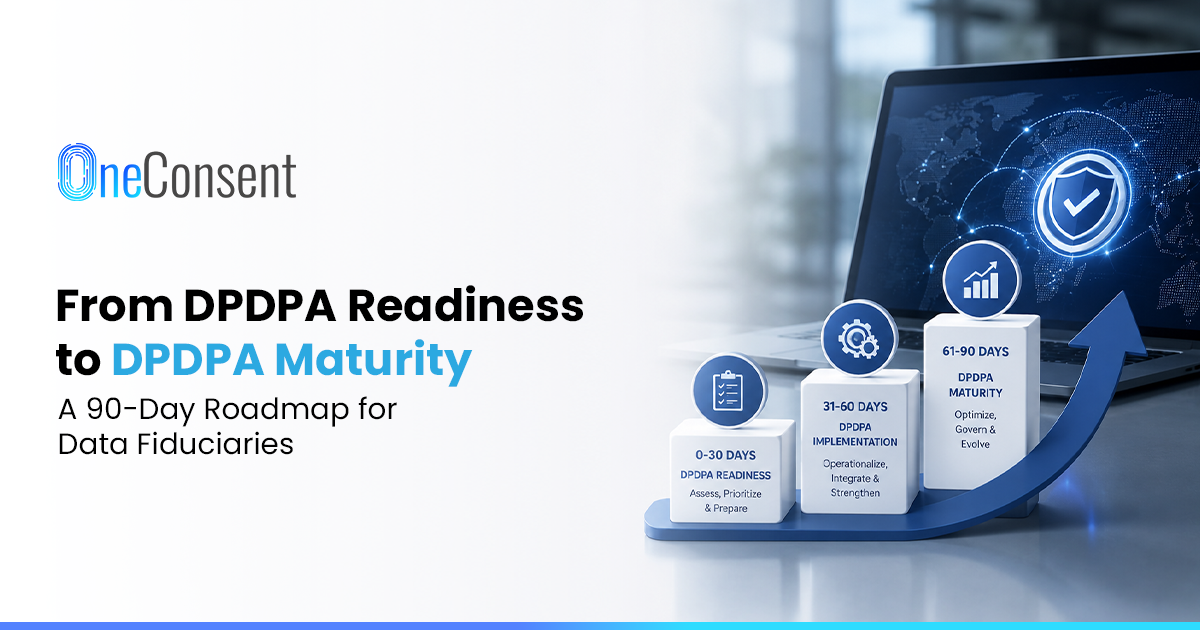
Is an organization "DPDPA ready," or is it "DPDPA mature"? The two sound similar. They are not the same thing, and the gap between them is exactly where most companies get stuck.
Readiness is the bare minimum. It is the notice on a website nobody reads. The consent checkbox ticked without a second thought. The Grievance Officer whose name sits buried somewhere in the footer. It satisfies the baseline regulators expect on day one.
DPDP Maturity is something else entirely. It is the point where consent-first thinking stops being a checklist item and starts being how the company operates. At that stage, DPDPA compliance becomes a capability that has been built, one that can genuinely become something to compete on.
So how does an organization get from one to the other? Below is a 90-day roadmap that gets there in three deliberate phases.
Days 1 to 30: Get the Foundation Right
The first month is about knowing exactly what is being dealt with before trying to fix any of it.
Map the Data Before Touching Anything Else
Start with data mapping, and do not rush this part. A clear picture of every touchpoint where personal data enters, moves through, or leaves the organization is needed. Skip this step or do it half-heartedly, and everything built afterward will sit on shaky ground.
Assess the Legal Basis for Every Activity
Once the data map exists, move into a legal basis assessment. For each processing activity identified, ask the hard question: does this need Section 6 consent, or can it stand on Section 7 legitimate use grounds? Write the reasoning down. It will be useful later when a regulator, an auditor, or the internal legal team asks for justification.
Appoint the Grievance Officer and Issue Notice
By week three, the Grievance Officer should be appointed if that has not already happened, with their contact details placed somewhere customers can find them, on the website and the app, with the complaint intake process live and tested, documented in a policy that has been reviewed and confirmed working.
The month closes with the one-time Notice issued to existing customers and a consent refresh campaign rolled out across the full customer base. It is tedious. It is also non-negotiable.
Days 31 to 60: Build the Infrastructure That Actually Holds
With the groundwork laid, month two is where things get technical.
Deploy the Consent Management Platform
A Consent Management Platform that can handle per-purpose consent collection everywhere customers interact — across web, app, and email — needs to be deployed. This tool needs ongoing configuration and monitoring to stay effective. The enforcement layer needs proper configuration so consent choices are respected downstream, not just recorded.
Rewrite Notices in Plain Language
This is also the point to take a hard look at existing consent notices. Are they written in language a real person would understand, or still full of legal hedging? Rewriting them in plain language, making them available in the languages customers speak, and breaking them down purpose by purpose instead of bundling everything into one vague blanket consent makes a measurable difference.
Build the Self-Service Portal
Somewhere around week seven, a customer-facing portal should go live. People should be able to withdraw consent, file a DSAR, raise a grievance, or register a nomination without emailing someone and waiting a week for a reply.
Test the Breach Response Plan
Before the month ends, breach response infrastructure needs to be in place. How a breach gets detected, how severity gets assessed, and who gets notified all need defining — and then actually testing. A breach plan earns its value only once it has been rehearsed.
Days 61 to 90: Make It Part of How the Organization Works
The final stretch is about embedding everything built so far into the fabric of the organization, so it does not quietly erode the moment nobody is watching.
Train by Role, Not by Department Email
Teams need proper training, by role. Someone in marketing needs different training from someone in engineering or customer support. Completion should be tracked, since genuine training is measured by what people demonstrably learn.
Fix the Vendor Contracts
Vendor contracts need another pass. Every Data Processor the organization works with needs the right DPDPA provisions built into the agreement, not bolted on as an afterthought.
Run the First DPIA
Around week eleven, a Data Protection Impact Assessment should run on whichever processing activity carries the highest risk in the organization. What gets found, and what gets done about it, should be documented.
Close the Loop With the RoPA
The 90 days wraps up with the Record of Processing Activities completed, folding in everything learned along the way. This is the compliance programme finally catching up to reality.
How to Know It Is Working
Numbers matter more than good intentions here. By day 90, a genuinely mature programme should be able to show the consent rate per purpose, meaning whether people are opting in, purpose by purpose. It should also show how fast withdrawal requests get honoured, the average DSAR turnaround time, what percentage of grievances gets resolved within the required window, and, if a simulated breach was run, how quickly the Board and affected Data Principals could have been notified.
If those numbers cannot be produced, the organization is probably still at readiness, regardless of how the policies read on paper.
The Day 90 Checkpoint
When day 90 arrives, it is worth pausing rather than moving straight on. Sitting down with the DPO or senior compliance lead to review the metrics honestly, naming the top three gaps that still exist (there will be some), and considering a third-party audit of the whole program, these steps tend to catch what internal teams stop noticing after staring at the same thing for three months straight.
Where This Leaves the Organization
90 days marks the point where the real work begins. Privacy compliance was never meant to be a one-time project completed and filed away. It is an ongoing discipline. Organizations that treat day 90 as a starting point rather than a graduation are the ones that end up with a data governance culture strong enough to be a genuine business advantage, one built to stand up to scrutiny instead of hoping nobody looks too closely.
Moving from DPDPA readiness to maturity requires the right infrastructure to support consent across the entire customer lifecycle. OneConsent helps organizations manage purpose-specific consent, track consent preferences, and maintain auditable records in one place.
Request a demo to see how OneConsent works and explore how it can support your organization's journey toward DPDPA maturity.
Frequently Asked Questions
Have more questions?
Search our full DPDP knowledge base for more answers.