Building a DPDPA-Compliant Customer Portal: Why CX and Legal Must Work Together
Your customer portal is where customers exercise their rights under the DPDPA. Building a DPDPA-compliant customer portal requires CX and Legal teams to work together, balancing a seamless customer experience with the privacy, consent, and data-rights requirements that support a strong compliance posture.
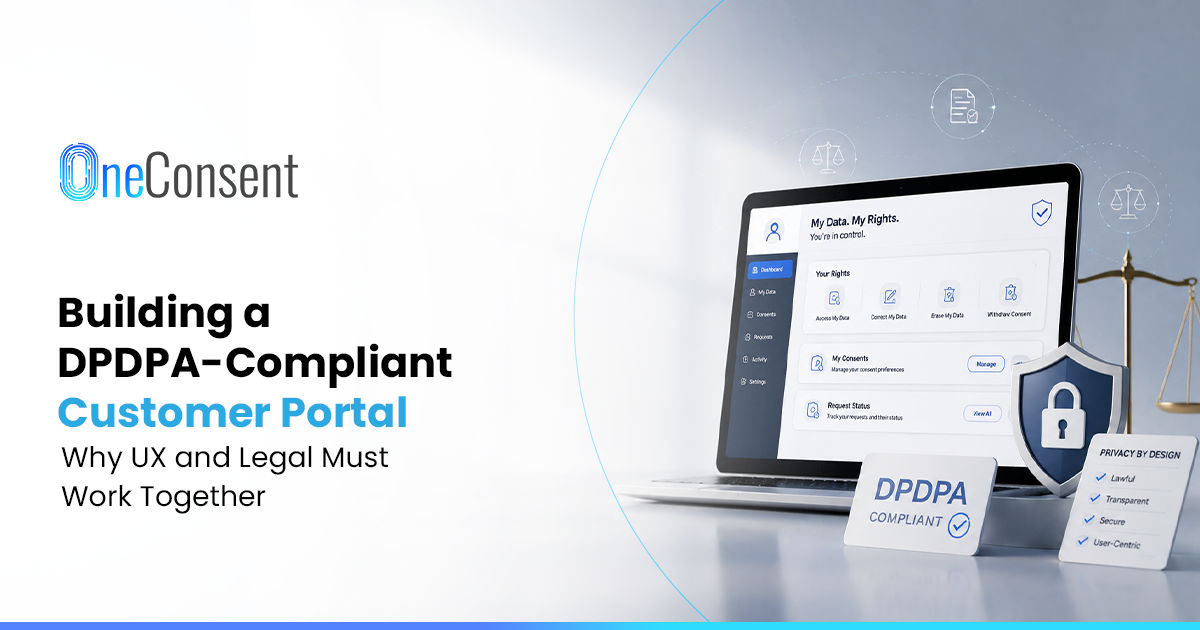
A DPDPA-compliant customer portal needs to support two connected priorities: the organisation's privacy obligations and a clear Customer Experience (CX) for the people exercising their rights. Legal and privacy teams define the applicable requirements, while CX teams translate them into journeys that Data Principals can understand and use.
Under the DPDPA, Data Principals have rights relating to access, correction, completion and updating, erasure, grievance redressal and nomination. Where personal data is processed on the basis of consent, individuals can also withdraw that consent.
For organisations, supporting Data Principal rights under DPDPA requires customer-facing processes through which people can understand their choices, submit requests and follow what happens next.
The DPDPA and DPDP Rules do not prescribe a specific customer portal. Organisations can use a portal to bring consent choices, privacy requests, grievances and request tracking into a structured digital experience.
This is where CX and legal need to work together. Privacy teams establish the requirements and processes that apply. CX and product teams determine how customers navigate those processes. When these layers are designed together, the portal can support DPDPA compliance while making privacy interactions easier for customers to understand and complete.
What Makes a Customer Portal DPDPA-Compliant?
A DPDPA-compliant customer portal should provide accessible ways for Data Principals to understand and exercise the rights and choices available to them. From a CX perspective, those processes should appear as clear actions and understandable journeys.
The experience can be organised around four common customer actions: manage consent, exercise Data Principal rights, raise a grievance and track an existing request.
Where an organisation maintains consent records, customers can be given visibility into relevant consent choices. Where consent is the basis for processing, the purpose associated with each choice should be understandable and an accessible withdrawal mechanism should be available.
The portal can also support Data Principal request management for access, correction, updating and erasure requests. An acknowledgement, reference number and status information can help customers understand what is happening after a request is submitted.
Grievance redressal should have a visible entry point so customers can understand where to submit a grievance and how the process works.
The portal can also provide a workflow for nomination under the DPDPA, allowing a Data Principal to provide the particulars required by the organisation for exercising the nomination right.
For legal and privacy teams, these functions represent different rights and processes. For the customer, they should form one consistent privacy experience.
Consent Withdrawal: Combining Legal Requirements With Clear CX
Where processing relies on consent, the legal requirement and the customer experience need to work together. The portal should provide an identifiable mechanism for consent withdrawal under DPDPA, while the CX should help the Data Principal understand which consent is being withdrawn and what action they are taking.
A useful withdrawal experience can provide:
A view of relevant consent choices
A clear description of the purpose associated with each choice
An explicit option to withdraw consent where applicable
A straightforward confirmation step
Confirmation that the withdrawal request has been recorded
Good CX also supports the operational objective. Clear labels, visible choices and confirmation messages help customers understand what has changed.
Behind the interface, the updated consent status needs to reach the relevant systems and workflows. For organisations managing consent across CRM, marketing, customer service and other systems, a consent management platform can help maintain consistent consent and preference information across the technology environment.
For a closer look at the process, see the guide to consent withdrawal under DPDPA.
Designing CX Around Data Principal Rights
Legal and privacy teams can define which Data Principal rights under DPDPA apply and what information is required to process each request. CX teams can translate those requirements into clear request categories and guided forms.
Instead of requiring customers to describe the entire issue in an open text field, a portal can present actions such as:
Access personal data information
Correct or update personal data
Request erasure where applicable
Raise a privacy-related grievance
Guided forms can then collect the information required for the selected request.
The operational work behind these requests may involve several systems and teams. An erasure request, for example, may require the organisation to identify where relevant personal data is held and determine the appropriate action under applicable obligations.
That backend complexity should stay within the organisation's operational workflow. From a CX perspective, the Data Principal should see a clear submission process, acknowledgement and understandable status information.
This is where Data Principal request management connects legal requirements with Customer Experience. The customer sees one journey while the organisation manages the teams, systems and approvals required to resolve the request.
Identity Verification: Balancing Privacy and Usability
Identity verification is another area where legal, security and CX considerations meet.
A privacy request may lead to personal data being disclosed, modified or erased. Organisations therefore need an appropriate way to establish that the person making the request is authorised to do so.
The verification method can align with the organisation's existing authentication controls and the sensitivity of the requested action.
An OTP, authenticated account session or another proportionate verification method may be appropriate depending on the organisation's systems and risk model. OTP is one possible implementation approach and is not a specific DPDPA requirement.
From a CX perspective, the verification step should explain what the customer needs to do and provide a clear path back into the request journey once verification is complete.
Clear Language and Accessibility Are Part of Good Privacy CX
A Data Principal should be able to understand the available choices, identify the correct request and complete the required steps without having to interpret legal terminology.
Customer-facing privacy interfaces should therefore use clear language when describing consent choices, request categories, grievance processes and the consequences of an action.
Language accessibility also matters for organisations serving customers across India. Consent-related information should take into account the applicable DPDPA language requirements, while wider privacy workflows can be designed around the language needs of the organisation's customer base.
Mobile accessibility should form part of the same CX design process. Customers may access a portal through different devices and network conditions, so responsive layouts, readable text, efficient page loading and straightforward navigation can improve usability.
The objective is to make privacy interactions consistent with the wider digital Customer Experience across the organisation.
Where CX and Legal Need to Work Together
Building a DPDPA-compliant customer portal requires coordination between the teams defining privacy requirements and the teams designing the customer experience.
Legal and privacy teams determine the applicable Data Principal rights, consent requirements, grievance processes, verification considerations and records that need to be maintained.
CX and product teams translate those requirements into navigation, labels, forms, confirmation messages, status information and accessible interfaces.
Technology and operations teams connect customer-facing actions with the systems and workflows responsible for processing them.
These decisions work best as one connected process. A portal needs legally accurate choices, understandable interactions and operational workflows capable of carrying each request through to resolution.
For example, legal may establish what information is needed for a correction request. CX determines how that information is requested from the customer. Technology routes the submitted request to the appropriate system or team. Operations then manages the request through resolution.
The practical objective is to keep the legal requirement, customer action and backend workflow connected throughout the journey.
Turning Legal Requirements Into a Usable Customer Journey
A DPDPA-aligned portal should connect each stage of a privacy request into one understandable customer journey.
A practical Data Principal request management flow can follow:
Choose request → Verify identity → Submit details → Receive acknowledgement → Process request → Track status → Receive resolution
Each stage has both an operational consideration and a CX consideration.
The organisation needs the information and controls required to process the request. The Data Principal needs clear instructions, visible progress and understandable communication.
A correction request may need to reach the system maintaining the relevant customer record. A withdrawal request may need to update consent status across connected systems. An erasure request may require review across several data repositories.
For the customer, these activities should still feel like one connected journey.
This is one of the main reasons CX and legal should be considered together when designing the portal. The legal right defines what the Data Principal can request. The customer journey determines how accessible that right is in practice.
Connecting Portal CX With DPDPA Compliance Operations
A DPDPA-compliant customer portal forms the customer-facing layer of a wider privacy process.
When a Data Principal submits a correction, erasure, grievance or consent withdrawal request, the action may need to reach different teams and systems. Supporting this requires appropriate data governance, security measures, records, responsibilities and internal privacy processes behind the interface.
For privacy and compliance teams, a useful assessment is whether each customer-facing action has a corresponding operational workflow through to resolution.
Teams can review:
How requests enter the organisation
How identity or authority is established
Which team receives each type of request
Which systems need to be reviewed or updated
How progress is tracked
How the final outcome is communicated
What evidence is maintained after completion
A consent management system under the DPDP Act can form part of this technology layer where consent records, customer preferences and privacy workflows need to remain connected across systems.
For organisations evaluating a consent management platform in India, the assessment can therefore include both the customer-facing experience and the data privacy and data governance processes operating behind it.
How a Consent Management Platform Can Connect CX and Privacy Operations
Once the legal requirements and customer journey have been defined, technology can help connect the two.
A consent management platform can provide part of the operational layer connecting customer-facing privacy interactions with internal consent and request workflows.
OneConsent supports this layer through capabilities covering Data Principal requests, consent withdrawal, grievance workflows, identity verification, request tracking and audit trails. The platform can help privacy teams connect customer-facing requests with the workflows used to review and resolve them. These capabilities align with OneConsent's documented Data Principal Access Rights architecture.
Within the wider OneConsent architecture, Data Principal rights management sits alongside consent and preference management and privacy governance. The recommended product structure specifically connects request intake, verification, processing, resolution and notification as part of the Data Principal rights journey.
For organisations reviewing their DPDPA compliance roadmap, this provides a way to assess how legal requirements, Customer Experience and privacy operations connect across the customer lifecycle.
Building DPDPA Compliance Into the Customer Experience
Building a DPDPA-compliant customer portal requires legal accuracy, usable CX and connected operational processes.
Legal and privacy teams establish the applicable requirements. CX and product teams turn those requirements into understandable customer interactions. Technology and operations teams ensure those interactions connect with the systems responsible for processing them.
When these elements work together, Data Principals receive a clearer way to manage consent and exercise their rights, while organisations gain a structured approach to DPDPA compliance and Data Principal request management.
For organisations reviewing an existing portal, a useful starting point is to map each Data Principal right from the legal requirement through the customer interaction and into the corresponding operational workflow.
Request a demo to explore how OneConsent can support consent and Data Principal request workflows across your organisation.
Frequently Asked Questions
Have more questions?
Search our full DPDP knowledge base for more answers.