DPDPA for Retail and Loyalty Programs: CRM Data, Consent and Customer Profiles
Loyalty programmes are consent management programmes in disguise. The entire model depends on knowing your customer and DPDPA defines exactly what it takes to do that legally.
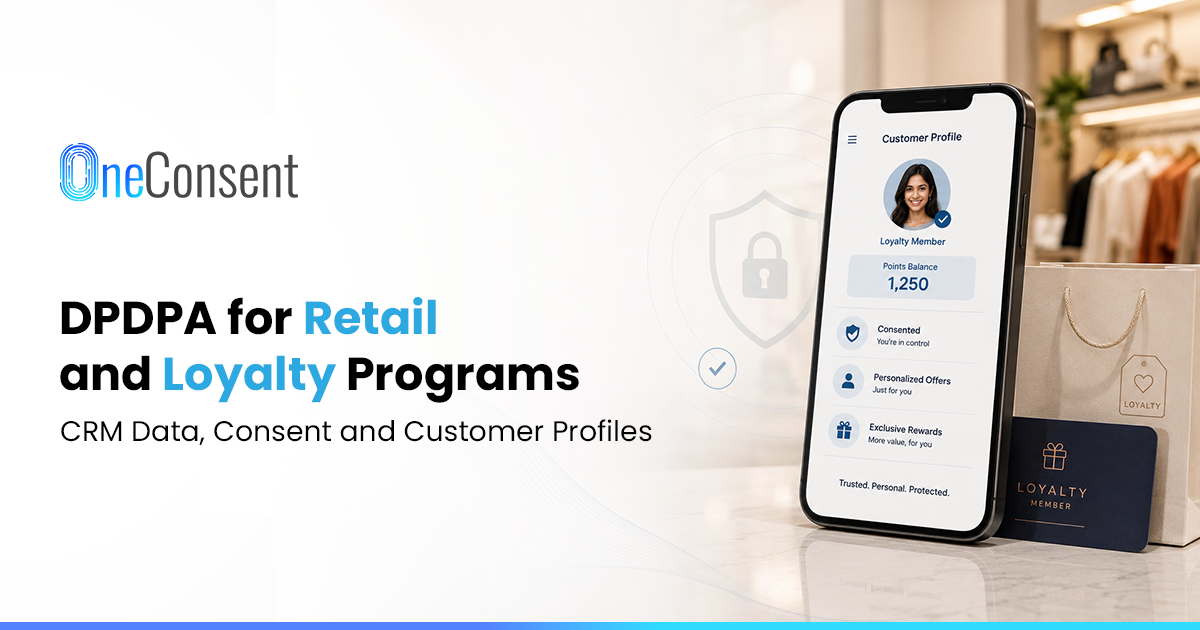
India's retail sector has poured serious money into loyalty programs, CRM platforms, and customer data infrastructure over the last decade. The logic is straightforward: collect data, understand customers, personalize experiences, and drive repeat purchase. None of that changes under DPDPA. The business model still works, but only if the data collection underneath it runs on valid, explicit, per-purpose consent, not the implied consent most loyalty programs were built on five or ten years ago.
What a Loyalty Program Actually Collects
It helps to lay this out in full, because most retail teams underestimate how much data a single loyalty membership touches. Registration data such as name, email, phone number, and date of birth. Purchase transaction data. Redemption history. Communication preferences. Location data, including in-store check-ins and geo-targeted offers. Social data, if a member has linked their social accounts. Browsing data, if there's an app or website tied to the programme. And inferred data such as customer segments and propensity scores generated behind the scenes. All of this counts as personal data under DPDPA, including the inferred data that customers never directly typed in themselves.
The First Step to Compliant Consent? Enrollment Done Right.
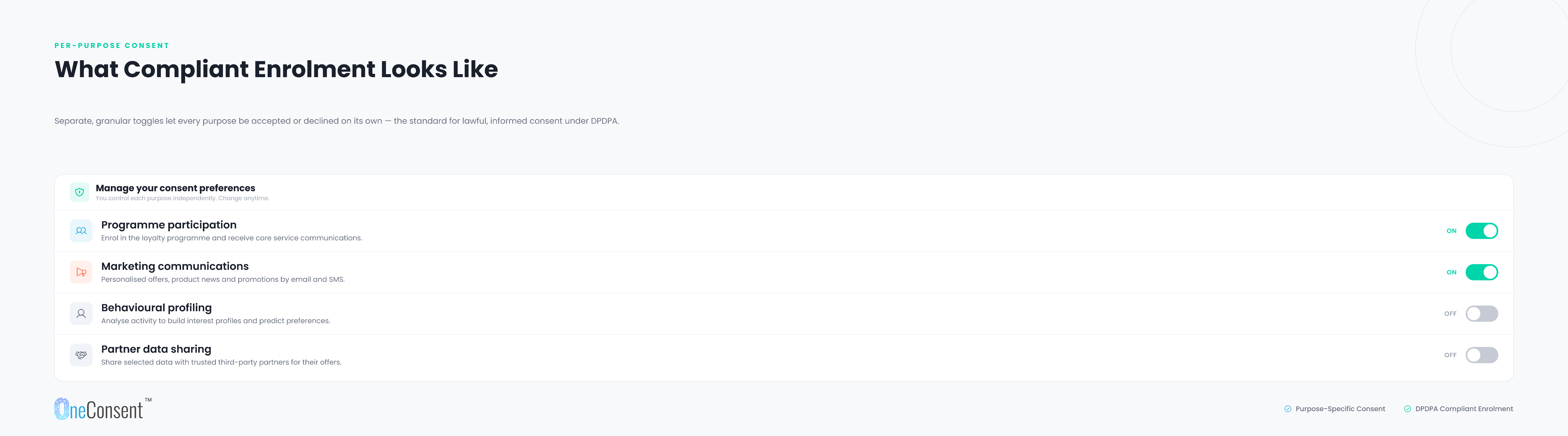
Enrolment is the primary moment you have to collect consent properly, and it's worth treating it that way instead of rushing a new member through a signup form. Under DPDPA, you need specific consent for each distinct processing purpose at this point: core program participation covering points accrual and redemption, marketing communications across email, SMS, and push separately for each channel, data analytics and profiling, third-party partner data sharing, and personalization algorithms. These consents need to be individually revokable. A customer should be able to stay enrolled in the program, keep earning and redeeming points, while opting out of marketing messages or profiling entirely. Bundling all of that into one checkbox defeats the purpose of per-purpose consent, even if it's more convenient at the design stage.
This same enrolment-moment logic shows up in other employee and customer contexts too. This piece covers a comparable idea on the employment side. It says that the point of first data collection is the cleanest opportunity to get consent scoped correctly and skipping that step creates problems that compound for years afterward.
Related Reads: DPDPA for HR and Employers.
The Partner Data Sharing Problem Nobody's Fixed Yet
A lot of loyalty programs share member data with partner brands, co-branded credit cards, airline partners, hospitality chains, and the list usually grows over time as new partnerships get signed. Under DPDPA, sharing data with each named partner requires explicit consent for that specific transfer, or a properly contracted data processor relationship that meets the Act's standards. Most current partner agreements in Indian loyalty programs were drafted before this requirement existed, which means they fall short of it now. If your loyalty program has accumulated five or six partner integrations over the years, each one needs its own look rather than a blanket assumption that the original enrolment consent covers all of them.
Your CRM Is Probably Full of Outdated Consent
Here's an uncomfortable but useful fact: your CRM is likely carrying thousands of members who joined years ago under consent mechanisms that simply don't meet DPDPA standards. A consent refresh program sending a clear, DPDPA-compliant notice and consent request to your existing loyalty base, is not optional cleanup work. It's necessary. And it's worth reframing as an opportunity rather than a chore: reconfirming consent with active members tends to improve data quality, since the members who actively re-confirm are typically the more engaged, more valuable segment of your base anyway.
Personalization Is Still Legal, But It Needs Its Own Consent Line
Using loyalty data to build customer segments and personalize communications remains both valuable and entirely legal under DPDPA. What changes is that it needs explicit consent for profiling purposes specifically, separate from the general marketing consent line. If your CRM or recommendation engine is processing personal data to build profiles beyond what customers actually agreed to, that's a compliance gap, but it's also a trust risk that tends to surface eventually, often through a customer complaint or a DSAR request that exposes the mismatch between what was promised and what's actually happening behind the scenes.
Consent Has to Be Enforced in Real Time, Not Just Recorded
For a loyalty programme running into millions of members, consent can't just sit in a database as a static field that gets checked occasionally. It has to be enforceable in real time: checked before any marketing message goes out, before any profiling operation runs, before any partner data share happens. That kind of enforcement layer is an infrastructure decision, not a policy decision, and it's exactly the gap that trips up retailers who've written a compliant consent policy on paper but never built the system to actually act on it consistently.
Where This Leaves Retailers
The retailers who get DPDPA-compliant loyalty programmes right will end up with something genuinely better than what they had before: customers who knowingly and willingly shared their information, which tends to produce richer, more reliable data than anything collected through vague blanket consent. The alternative, a loyalty program still running on legally questionable data collection, is a liability sitting quietly in your CRM until someone files a complaint or a regulator asks the wrong question.
Zence CRM is built for exactly this shift, with consent-first data collection designed into the platform from day one rather than bolted on afterward. Explore Zence CRM to see how a retail CRM can handle per-purpose consent, partner data sharing, and real-time enforcement together, alongside OneConsent's consent management layer for the underlying compliance workflows.
Backlink: OneConsent (https://oneconsent.ai)
Frequently Asked Questions
Have more questions?
Search our full DPDP knowledge base for more answers.