Using Consent Data Strategically: How DPDPA Compliance Becomes a Customer Trust Advantage
DPDPA compliance can go beyond a cost centre. Learn how organizations turn consent data into a trust advantage and competitive intelligence with OneConsent
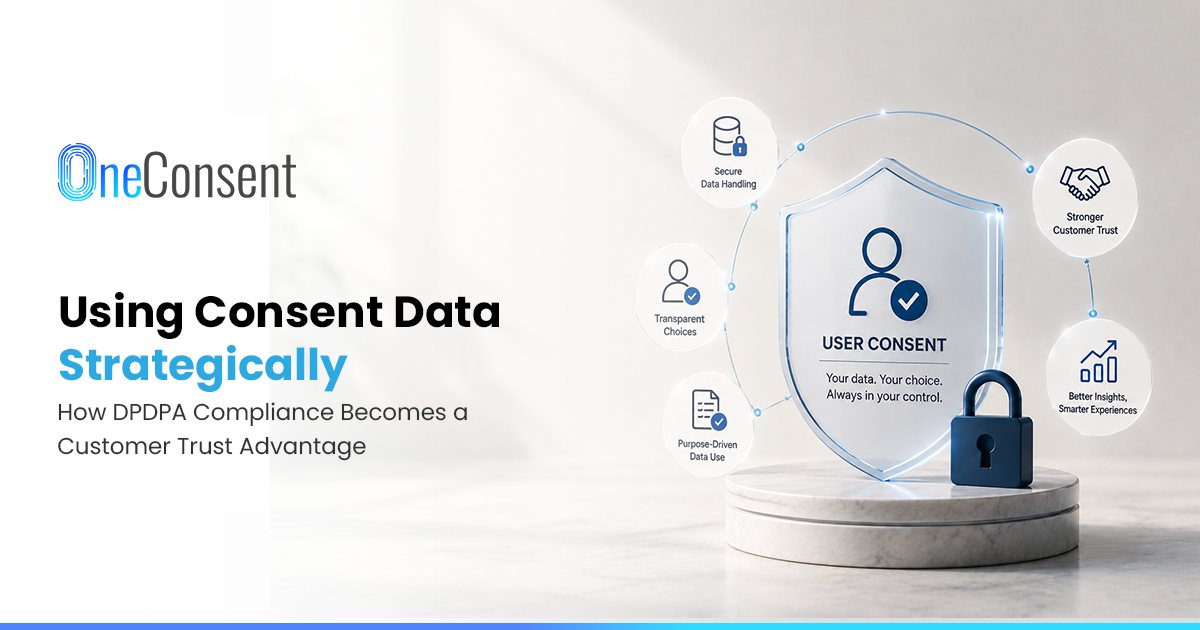
Ask most business owners what they think of when they hear "DPDPA," and chances are the response involves a sigh. New paperwork. New processes. Another compliance checklist to tick off before the auditors come knocking. It is easy to see why the Digital Personal Data Protection Act gets filed under "cost of doing business," when it belongs under "opportunity."
But that is exactly where a lot of companies are getting it wrong.
The businesses that are pulling ahead right now are not the ones treating DPDPA as a box to check. They are the ones who have figured out that consent data, handled well, functions as a business asset that builds trust, sharpens understanding of customers, and can set an organization apart from competitors who are still stuck in "avoid the fine" mode.
Why First-Party Data Is Suddenly Everyone's Favourite Topic
Here is the backdrop worth understanding. Third-party cookies are on their way out. Mobile ad identifiers are getting locked down. Regulators across the globe are cracking down on how data gets shared and sold. The old playbook, buy data, target broadly, hope for the best, is falling apart in real time.
What is left standing? First-party data. That is, information customers hand over willingly, because they trust the organization and they consented to it. And here is the thing: DPDPA compliance, done right, gives organizations a working roadmap for building this kind of data properly. Companies that lay this groundwork now, with clean consent practices baked into their systems, are setting themselves up with something that competitors cannot easily replicate once third-party data dries up completely.
Your Consent Data Is Telling You Something
Here is a detail that often gets overlooked: the consent data itself carries value, independent of the personal data it unlocks.
Think about it. Which customers are opting into personalization? Which ones are pulling back consent for certain kinds of processing? Which channels see the highest opt-in rates, and which ones make people hesitate?
That data doubles as customer intelligence sitting right there, waiting to be used. High consent rates around personalization tell an organization that people want a tailored experience. A spike in withdrawal requests for a specific purpose might be waving a red flag about a product issue or a communication approach that is rubbing people the wrong way. If an organization starts segmenting its audience by how they engage with consent choices, marketing and product teams suddenly have a much better read on what people want, instead of guessing.
Why Respecting Consent Builds Customer Trust
There is a pretty consistent pattern in consumer research: people share more, and share it more freely, with companies they believe will respect that information. It sounds obvious when said out loud, but so many businesses still treat privacy like an afterthought buried in eight-point font at the bottom of a signup page.
A consent portal that is easy to use. Notices that do not require a law degree to decode. A withdrawal process that does not feel like pulling teeth. These details function as signals customers notice. And customers pick up on those signals. The loyalty that comes from respecting someone's data rights is the kind of thing that cannot be bought with an ad budget, no matter how big it is.
It Is Becoming a Deal-Breaker in B2B, Too
If an organization operates in the B2B space, CRM tools, loyalty platforms, fintech infrastructure, anything that touches customer data on behalf of other businesses, this warrants attention. DPDPA compliance is becoming a procurement requirement in enterprise deals.
Enterprise buyers want proof. They need to know that whoever they are handing customer data to takes this seriously, on paper and in practice. A well-documented compliance program has become table stakes to clear procurement in enterprise deals.
Make Consent Transparency Part of the Customer Experience
Here is where a lot of companies leave value on the table: they treat DPDPA compliance as something to quietly handle in the background, instead of treating it as something worth talking about.
Flip that. Build a privacy centre customers can browse. Publish transparency reports every so often. Give people real, usable controls over their consent preferences right inside the product. When customers can see how their data is handled, instead of encountering a wall of legal text once, during signup, and never again, they are far more likely to trust the organization with more of it down the line.
Compare that to the standard approach: a privacy policy nobody reads, buried in a footer link, written by lawyers for other lawyers. One builds a relationship. The other checks a box.
Where This Leaves Organizations
DPDPA compliance was never designed to be a wall standing between an organization and its data strategy. It is more like a nudge toward building a better one from the ground up. Companies that treat it as a genuine investment are the ones who will walk away with stronger customer relationships, cleaner and more useful data, and a market position that is a lot harder for competitors to catch up to.
The compliance conversation is not going away anytime soon. The only real choice left is whether to use it to an advantage, or wait until everyone else already has.
Turning DPDPA compliance into a business advantage starts with having the right consent infrastructure in place. A consent management platform built for DPDPA gives organizations a practical way to manage consent preferences, build transparency into customer journeys, and maintain auditable consent records for regulatory readiness.
Request a demo to explore how OneConsent can help turn privacy compliance into a competitive advantage.
Frequently Asked Questions
Have more questions?
Search our full DPDP knowledge base for more answers.